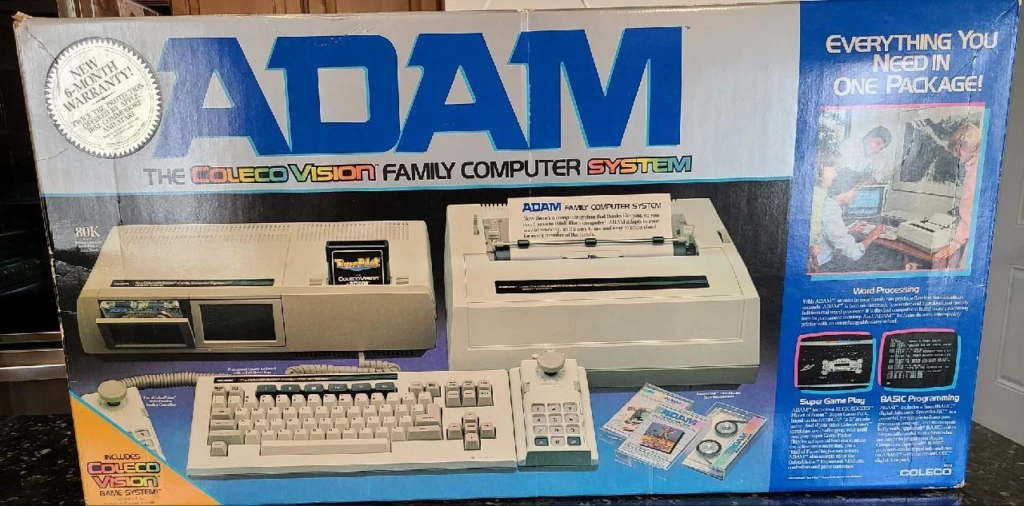
コレコADAMの未来
コレコのADAMは調子はどうですか?1983年にトイザらスで買ったやつです。
そうじゃない?そうする人はあまりいないよ。
80年代初頭は、PC愛好家にとって楽しい時代でした。AppleやIBMに加え、コモドール、TRS-80、Osbourne、Timex、Sinclair、そしてTI(Texas Instruments)まで登場しました。まだ標準規格や市場を席巻するリーダーは存在せず、コンピューターは趣味人がガレージで回路とブレッドボードを使って自作できるようなものでした(スティーブ・ウォズニアックのように)。回路を搭載した製品を製造したことがある企業は、どれもすぐに最新のパーソナルコンピューターを発表するほどでした。
初期の家庭用ビデオゲームシステム(ColecoVision)を開発したColecoもその一つです。これらの初期システムの多くは、1980年に発売された8ビットプロセッサZilog Z80をベースに構築されていました。Colecoの製品はADAMと呼ばれ、64KBのRAM、オプションのフロッピーディスク、テープ、プリンター、内蔵キーボードを備え、256×192のディスプレイ(通常はテレビ)をサポートしていました。これらすべてが800ドル以下で手に入ったのです!
残念ながら、ADAMは粗悪な出来でした。ディスクドライブとフロッピードライブは信頼性の低さで悪名高く、さらに悪いことに、起動時に強力な電磁パルスを放出し、周囲の磁気記憶装置を頻繁に破壊しました。Coleco社はこのシステムを50万台生産する予定でしたが、プロジェクトが中止されるまでに10万台も出荷されませんでした。その時点で、既に60%以上が返品されていました。Coleco社はこのプロジェクトで2億5,800万ドルの損失を出しました(1983年のドル換算で、現在の価値に換算すると7億8,100万ドルに相当します)。そして1988年に破産申請しました。
Colecoの物語はこれで終わりのはずでした。しかし10年後、Coleco ADAMを愛用する熱狂的なファンのグループがまだ存在していることに驚きました。そのうちの一人がUSENETに「Coleco ADAMの未来」と題した長文の記事を投稿し、その後に続編の質問も投稿しましたが、その後、他の場所では見つけることができませんでした。
以前コピーを保存していたので、ここに掲載します。
- パーソナルコンピューティングの原始時代からのコンピュータの歴史。
- ユーザー グループがピザ パーティー程度のものに進化したという、気まずい内容です。
- ADAMを使い続けることに執着しているように見える人たち…ADAM経由でPCにアクセスできるようにPCインターフェースを開発するほどです。なぜADAMが必要なのか(なぜPCを使わないのか)という疑問には、決して答えられません。
- Coleco ADAM は、より高級なシステム (64KB を超えるメモリを搭載したラップトップやコンピューターなど) に愚かにもお金を浪費するほとんどの人にとっては十分であるという苦々しい不満。
- そのコミュニティからの詐欺やアバンダンウェアに関する面白い伝承。
楽しむ!
コレコADAMの未来
送信者: [email protected] (Richard F. Drushel)
ニュースグループ: alt.folklore.computers、comp.os.cpm、comp.sys.misc、comp.os.misc
テーマ:Coleco ADAMの将来:ADAMcon 07の基調講演
日付: 1995年7月27日 00:22:28 GMT
コレコADAMの未来:1995年
リチャード・F・ドゥルシェルの視点
ADAMcon 07にて
1995年7月20日~24日
ウォータールー、オンタリオ州、カナダ
まず、今年の「ADAMの未来」講演を依頼してくださったデール・ウィック氏に感謝申し上げます。第二に、私は博士号を持ち、生物学研究者ですが、専門用語は最小限に抑えることをお約束します。第三に、もし私の発言が皆様を怒らせたり、動揺させたりする可能性が*高い*ことを予めお詫び申し上げます。第四に、これから30分の間に、皆様が怒ったり動揺したりする可能性が高いことをお伝えしておきます。お分かりいただけると思いますが、これは必要であり、また良いことです。第五に、私は個人攻撃をするためにここにいるわけではありません。また、皆様の怒りや動揺を私への個人攻撃と受け取るつもりもありませんので、ご安心ください。そして最後に、一般的な免責事項をすべて記載する必要があります。ここで述べられている見解は私自身の見解であり、必ずしも大会主催者やADAMコミュニティの誰の見解を反映するものではありません。
この講義では、まずADAMの歴史について少しお話しします。次に、ADAMのハードウェアとソフトウェアの将来についてお話しします。最後に、コミュニティの課題とも言えるいくつかの点について議論し、それらをまとめて、皆さんにお伝えしたいメッセージをいくつか提示したいと思います。
I. 歴史。
今日ここにいらっしゃる皆さんの多くは、Coleco ADAM の国際的なコミュニティが始まった当初から参加してきました。1982 年に ColecoVision のビデオゲーム システムを手に入れました。テレビで ADAM コンピュータのコマーシャルを見て、1983 年のクリスマスに R59 ADAM を 600 ドルで購入し、箱から出した直後に電源が切れたため修理に出した方もいるかもしれません。SmartBASIC プログラムのリストが掲載されていたため、Family Computing や Computer Shopper を購読しました。Coleco が倒産すると、NIAD (Northern Illiana ADAM ユーザー グループ) などのユーザー グループに参加したり、独自のユーザー グループを立ち上げたりしました。ニュースレターを購読したり、ニュースレターに記事を書いたり、独自の記事を発表したりしました。ADAMlink モデムを購入し、CompuServe に参加して BBS に電話をかけ始めたり、あるいは独自の BBS を立ち上げたりしました。ニュースレターで読んでいた人々と電子的に会話を始めました。 Eve Computer Systemsの誕生と消滅、Orphanware Business SystemsとMicro Innovationsの創業を目の当たりにしてきました。Solomon Swiftの栄枯盛衰も見てきました。1989年の第1回ADAMconにも参加しました。あらゆる重要な「初」を目の当たりにしてきました。
しかしながら、私はADAMに遅れて参加し、ADAMコミュニティにも遅れて参加しました。ADAMとの私の歴史を少しお話ししましょう。私の最初のADAMは父のR59で、1984年のクリスマスに買ったばかりで、なんと160Kのディスクドライブを搭載していました。1988年、父はソフトウェアのバグにうんざりしてTandy 1000のクローンPCを購入した際に、このR59をゴミ箱から救い出しました。父はNIADの2年目に入会しましたが、1年後にはNIADのSmartBASICプログラムがシステムを頻繁にロックさせてしまうため、NIADとADAMの両方を諦めてしまいました。私はNIADの購読を更新しました(主に製品ラインのためで、記事にはあまり関心がありませんでした)。そして、SmartBASIC 1.0の新バージョン、R80コンソール、予備のテープドライブ、パナソニックのプリンター、そして「Hacker's Guide to ADAM」の2冊を購入しました。 ADAMを当初の目的としたのは、家庭用ワードプロセッサとしてでした。大学院に進学し、大量の書類を作成する必要があり、研究室にはコンピュータが2台しかなく、常に混み合っていました。ノートン・ユーティリティーズを使ってPCの360Kドライブで160KのADAMディスクからブロックを読み取れることを知った時、ADAMファイルをコピーするPCプログラムを書く意欲が湧きました。これがきっかけで、PCとZ80アセンブリ言語を徹底的にハッキングし、最終的にはADAMのEOSオペレーティングシステムとSmartBASICを逆アセンブルするようになりました。しかし、学業が忙しくなり、ADAMで遊ぶ時間もなくなり、バグ修正を迅速に行うことでADAMを使って有益な研究を行うこと(当初の目的)は不可能であることが明らかになりました。1989年初頭、ADAMcon 01が立ち上がる直前にNIADを辞め、それが1990年秋までADAM関係者と関わる最後の機会となりました。当時、私は博士論文の執筆に取り組んでいました。論文を書き終え、2400ボーモデム内蔵のノートパソコンを購入しました。クリーブランドのフリーネットにアカウントを取得し、ADAMの署名を見つけました。そこには、なんと私たちのシステム管理者であるハーマン・メイソン・ジュニアとジョージ・コチュワラがいました。彼らは、私が「ハッカーズ・ガイド」のわずかな助けを借りてEOSとSmartBASICについてどれほど理解していたかを知り、SmartBASIC 1.xの初期バージョンを見た時、私が誰も成し遂げていないことを成し遂げ、多くのADAMユーザーが恩恵を受けられることを実感しました。彼らのBBSや人脈を通して、彼らは私をADAMコミュニティに再び繋いでくれました。私が今日ここにいるのは、彼らのおかげです。
私がADAMとの個人的な関わりの歴史をお話しするのは、多くの先駆者たちと比べると、私が後発組であり、ましてや部外者であるということを強調するためです。だからこそ、私は独特の客観性を持っていると信じていますが、ADAMの仲間内での私の地位が低いため、これから述べる内容について、皆さんの中には理解しにくい方もいらっしゃるかもしれません。
II. ハードウェア
ADAMcon 06で、ゲームカートリッジ、ディスクドライブ、そしてADAMシステムボードに搭載されている読み取り専用メモリチップの寿命には限りがあるという事実をお伝えした際、多くの皆様に驚きと不安を与えたことと思います。ROMとEPROMの平均故障寿命は10年です。この故障はシングルビットエラーで、1が0になったり、0が1になったりするものです。ADAMは発売から12年、ColecoVisionは13年が経過しました。今後は、不安定なゲームカートリッジや、SmartWriterに原因不明のエラーが発生するADAM(SmartWriterはEPROMに格納されているため)、さらには頻繁にクラッシュするADAM(OS7とEOSの両方のオペレーティングシステムがROMに格納されているため)が登場することが予想されます。これらのシングルビットエラーがいつどこで発生するかを予測することは不可能であり、発生しても目立った損害が発生しない可能性もあります。たとえば、エラーが内部メッセージ文字列(非表示のプログラマ名や「Hi Cathy」メッセージなど)で発生した場合、何の影響も見られません。ただし、エラーがメニュー文字列または画面データ領域で発生した場合は、SmartKey メニューが壊れたり、画面表示の一部に不要なデータが表示されたりする可能性がありますが、通常の操作には影響しません。最悪のケースは、もちろん、コード セグメントのエラーです。この場合、実際のマシン コードが別の命令に変化し、まったく予測できない結果が生じ、プログラムが誤作動を起こします。SmartBASIC の EOS ROM ルーチン _WRITE_BLOCK でこのようなエラーが発生した場合の影響を想像してみてください。テープやディスク上の既存のプログラムをロードして実行することはできますが、_WRITE_BLOCK ルーチン自体が壊れているため、何も保存できなくなります。
6801マイクロコントローラ内には、テープドライブ、キーボード、プリンタ、そしてADAMnet自体の動作を制御するROMコードも保存されています。このROMも時間の経過とともにシングルビットエラーが発生する可能性があり、ここで何らかの障害が発生すると、テープドライブ、プリンタ、そしてADAM自体が故障するなど、壊滅的な結果を招くことになります。
ADAMが故障し始める…恐ろしい考えです。幸いなことに、ADAMにこのような厄介なシングルビットエラーが発生した時のために、今すぐ対策を講じることができます。標準ROMとEPROMを読み書きできるデバイスは存在します。これらは一般的で比較的安価(約150米ドル)で、空のEPROMも同様です(1枚2~5米ドル)。対策としては、ROMがまだ使える今のうちに、すべてのROMを読み込んでデータを保存しておくことです。ROMが壊れたら、保存したデータで新しいROMをプログラムすれば、さらに10年ほどは使えます。EPROM(Eは消去可能プログラマブル読み取り専用メモリの略)の場合は、新しいROMを購入する必要すらありません。小さな石英窓(通常はラベルで覆われています)を開け、明るい紫外線で消去して再プログラムするだけです。
しかし、6801マイクロコントローラの場合、交換作業は少々複雑です。6801は製造時にプログラムが組み込まれているため、変更したり交換したりすることはできません。6801のEPROM版である68701は入手可能ですが、(a) 高価で約25米ドル、(b) 68701のリーダライタは標準的なEPROMバーナーよりもはるかに高価で約500米ドル、(c) 6801とピン互換ではないため、ジャンパー配線を追加せずに68701を6801ソケットにそのまま差し込むことはできません。
交換時に最後に頭を悩ませるのは、故障したチップがソケットではなく、回路基板に直接はんだ付けされている可能性があることです。この場合、新しいチップを取り付けるには、古いチップのはんだ付けを外す必要があります(次回の交換を容易にするために、できればソケットに取り付けておくのが理想的です)。40ピンチップのはんだ付けを外すのは習得が難しい技術なので、ADAMユーザーならプロの修理業者に依頼する必要があるでしょう。私は、ソケットにROMが取り付けられたゲームカートリッジを見たことはありません。EOSとSmartWriterのROMとEPROMは常にソケットに取り付けられています。6801マイクロコントローラは、ソケットに取り付けられている場合と取り付けられていない場合があります。
著作権の問題はありますが、EPROMと6801バイナリの集中ライブラリを構築できれば素晴らしいでしょう。そうすれば、*あなたの* SmartWriter ROMや*あなたの* Cabbage Patch Kids Adventure In The Park ゲームカートリッジが壊れたとしても、どこかに正常に動作するコピーがあるので、そこから復元できるはずです。適切なハードウェアを持っている人なら、新しいEPROMを焼き、故障した6801マイクロコントローラを68701に交換する作業を監督できるでしょう。ANNが既存のADAM修理サービスや、私のような必要な機材を既に持っているハードウェアハッカーと協力して、この作業を調整するのは良い仕事かもしれません。あるいは、ANNが必要な機材を公共財として購入し、それを操作する担当者を指名して、ADAMユーザー全員に原価(つまり非営利)でサービスを提供するという方法もあります。念のため言っておきますが、この講演では利益について後ほど詳しく説明します。
ADAM が今後数年間で故障しなくても、周辺機器の一部が故障し始める可能性が高いでしょう。これは単に経年劣化によるものもありますが、Coleco のハードウェア設計のまずさが経年劣化の影響を悪化させています。ファン冷却装置がないため、すべてが熱くなります。ADAM プリンターを 1 時間ほど起動させた後、背面にある大きなアルミ製ヒートシンクに触れてみてください。あるいは、テープドライブに収納されたデータパックに触れてみてください。最悪なのはオリジナルの 160K ディスクドライブです。安っぽい設計のため、電源回路がひどく過負荷になっており、一部の部品は沸騰して水が蒸発してしまう可能性があります。化学では、温度が 10 度 (華氏 18 度) 上昇するごとに、化学反応の速度が 2 倍になると言われています。これは、故障したディスクドライブの一部の部品が、より適切な30℃(華氏86度)に冷却されていた場合と比べて、約128倍の速さで劣化していることを意味します。この化学入門から得られる教訓は、ADAMをできるだけ長持ちさせたいなら、冷却状態を保つべきだということです。扇風機やエアコンの効いた部屋が最適ですが、寒い地下室でも問題ありません。
周辺機器が壊れたらどうしますか?Howard Pines 氏をはじめとする数社が修理を承ります。ADAM システム一式は今でも 50 ドル以下で手に入るので、予備の ADAM を 1 台(または 2 台)近所の Good Will やフリーマーケットで購入することを検討してみてはいかがでしょうか。きっとどこかで予備の ADAM が売られているはずです :-) これでキーボード、テープドライブ、プリンター、そしてシステムユニットが余ります。元の ADAM を修理に出している間、バックアップを利用できます。Coleco のディスクドライブは入手困難なので、もし入手できる機会があれば、今のうちに手に入れておきましょう。サードパーティ製のハードウェアについては、おそらく修理を依頼する必要があるでしょう。George Koczwara 氏と私は Orphanware 製品に対応できますし、Mark Gordon 氏も Micro Innovations 製品の修理を引き続き行ってくれると思います。 Orphanware シリアルボードを除くサードパーティ製の製品は現在生産終了となっているため、どんな価格でもこのハードウェアの複製を入手するのは困難です。
ADAMのハードウェアは古く、一部は入手困難または入手困難なため、万が一故障した場合の対応を心配されるかもしれません。ADAMの基本システムを使い続け、ディスクドライブ、パラレルプリンター、シリアルモデム、あるいはハードディスクへのアップグレードを検討されている方にとって、希少性と老朽化は大きな障害となります。入手困難なハードウェアは入手困難であり、仮に入手できたとしても希少性ゆえに高価です。また、高額を投じても、老朽化によって投資額が回収できない可能性もあります。これは、ADAMの熱心なファンでさえ、ADAMをゴミ箱に捨て、PowerPCやPentiumを購入したくなる理由となるでしょう。
ADAMハードウェアの不足と老朽化という問題は、テクノロジーによって解決できる可能性がありますが、コストが高額になる可能性があります。ADAMのハードウェアの将来像をいくつか考えてみましょう。
古いハードウェアと全く同じものを作ることもできます。SCSIインターフェース、24ビットカラーグラフィックス、16ビットステレオサウンドなど、新しく、より優れたハードウェアを設計・製造することもできます。ADAMシステムボードを再設計し、25MHzのZ380 CPUと16MBのRAMを搭載することも可能です。PCクローンの拡張スロットに差し込める「ADAMオン・ア・カード」のようなものも考えられます。これらのどれかに魅力を感じますか?マーク・ゴードンは、誰かが彼に設計費用を支払ってくれ、さらに誰かが実際に製造、販売、サポートに投資してくれるなら、これらのどれでも喜んで引き受けると述べています。費用は決して安くはありません。あなたは今、どれほどワクワクしていますか?
マーク・ゴードンはビジネスマンであり、ビジネスマンは利益を上げたいと考えています。新しいハードウェアの設計とデバッグ、さらにはライセンスに基づいて既存の設計を増産することにかかる初期費用の高さを考えると、ADAMハードウェアの大量生産は今後*ない*と私は考えています。なぜなら、ADAMハードウェアで利益を上げることはもはや不可能だからです。少なくとも20人が全額前払いしてくれなければ、損益分岐点に達することさえありません。ADAMコミュニティの「大義」のために、そのような金銭的損失を吸収できるほど裕福な人は、ここにいる私たちのうちほとんどいないでしょう。
これは、ADAM用の新しいハードウェア開発が今後も行われないという意味ではありません。Chris Braymen氏やDale Wick氏、あるいは私のような人間が時折新しいものを開発するでしょう。しかし、これらはあくまでも自作プロジェクトです。ADAMが欲しい場合は、JDRから部品を購入し、ワイヤーラップして、自分でテストするのはあなたの責任です。技術に詳しくないなら、誰かに原価あるいはわずかな費用で組み立ててもらうことはできるかもしれません。しかし、50台も組み立て済みですぐに使える状態で販売する人はいないでしょう。今は1995年であり、1986年ではありません(当時、Orphanware Business Systemsはハードウェア販売で数万ドル以上の利益を上げていたと聞いています)。残念なことに、1995年のADAMコミュニティには、利益を上げたいビジネスマンにとって投資を正当化するだけの市場がありませんでした。
一部の方にとって、もう一つ不愉快な事実があります。それは、ADAMユーザーの多くが他のコンピュータ、特にIBM-PCクローンに移行しているということです。私はこれを、ADAMユーザーにとって有利に活用できる、意外なメリットだと考えています。現代のPCは、大容量のハードドライブとディスクドライブ、高解像度のビデオディスプレイ、シリアルポート、パラレルポート、マウスへのアクセス機能、CD-ROMドライブ、光磁気ディスクドライブ、スキャナーなど、あらゆる機能を備えています。今ではジャンク扱いされている典型的な80286 PCでさえ、サードパーティ製のあらゆるオプションを備えた最先端のADAMよりも多くの周辺機器を搭載していることがよくあります。最も安価なIBM-PC/XTでさえ、20MBのハードドライブ、360KBのディスクドライブ、パラレルポート、シリアルポートを備えています。そしてPCは安価で、中にはADAMシステム単体とほぼ同じくらい安価なものもあります。ADAM専用ハードウェアは、もし存在するとしても、希少で高価です。 Micro Innovationsの1.44MBディスクドライブは、まだ入手できた頃は300ドル近くもしました。同じ金額で、1.44MBと1.2MBのディスクドライブと40MBのハードドライブを搭載した中古の'286が手に入ります。コンピューティング能力の向上にはこうした経済的なメリットが伴うため、一見すると、ADAMよりもPCの方が断然優れているように見えます。しかし、ADAMでPCの高度なハードウェアを使えるようにする手段があれば、ADAMを使い続ける動機が生まれるかもしれません。だからこそ、私はADAMコミュニティへのPCクローンの導入をメリットと考えています。なぜなら(恥知らずな宣伝モード入り)ADAMでIBMハードウェアを使えるようにする方法を開発したからです。私はそれをADAMserveと呼んでいます。
私のデモをご覧になった方の多くがご存知のとおり、ADAMserveの基本的な考え方は、ADAMをシリアル接続を介してPCと通信させることです。ADAMがディスク、テープ、またはプリンタにアクセスする際、ADAMnet純正のディスク、テープ、またはプリンタを探す代わりに、PCに*自身の*ディスクまたはプリンタを探すよう要求します。PCのハードウェアがすべての作業を行います。ADAMに「サービス」を提供し(これがADAMの名前の由来です)、その結果をシリアル接続を介してADAMに返します。ADAMのオペレーティングシステムソフトウェアは書き換えられているため、アプリケーションプログラムは「本物の」ADAMハードウェアを使用していないことを認識しません。この切り替えはユーザーにとって完全に透過的です。つまり、PCに接続してブロックまたは文字を転送できる*あらゆるデバイス*は、ADAMが所有するデバイスであるかのように、ADAMによって効果的に使用できます。もちろん、通信リンクを確立するには、純正のADAMシリアルボードが必要です。しかし、シリアルボードは一般的です(実際、OrphanwareタイプのHLM-GMKは現在も生産されています)。シリアルボードは、Coleco以外のハードウェアで必要な唯一の追加部品です。1テープドライブのADAMは、シリアルポートとADAMserveソフトウェアを搭載していれば、箱から出してすぐにPCのハードドライブ、ディスクドライブ、パラレルポートとシリアルポート、そしてリアルタイムクロックを使用できます。今日では、このハードウェアに相当するADAM専用のものを集めるのは困難で費用もかかります。ADAMserveは配布メディアの費用を除いて無料で提供される予定です。PCとシリアルボードをご用意ください。
ADAM 専用ハードウェアのほとんどは、生産を継続できるだけの市場が存在せず、高度なハードウェア機能を備えた PC をすでに所有している人も多いため、ADAMserve のようなものが、平均的な ADAM ユーザーにとって、アップグレードや、老朽化により故障したオリジナルの ADAM 周辺機器の交換の唯一の希望になると思います。
III. ソフトウェア
ハードウェアと同様に、ADAMソフトウェアの将来を考える上で、イノベーションとメンテナンスという二つの課題が重要です。幸いなことに、ソフトウェアに関する私のコメントはハードウェアに関するものよりも簡潔にまとめることができます :-)
イノベーションとは、ADAMコミュニティのニーズを満たす新しいソフトウェアを開発することです。メンテナンスとは、ハードウェアやオペレーティングシステムの革新にかかわらず、既存のアプリケーションプログラムを稼働させ続けること、そして既存の問題に対するバグ修正を行うことです。経済的インセンティブはソフトウェアとハードウェアに等しく適用されるため、今後ADAM向けの新しいアプリケーションソフトウェアはほとんど、あるいは全く開発されないと予想しています。コードのメンテナンスと軽微なバグ修正は、必要不可欠でありながら軽視され、残された少数のプログラマーに委ねられることになるでしょう。残念なことですが、ゲームを除けば、ADAMソフトウェアライブラリには、新しいプログラムを必要としているソフトウェアクラスは実際には存在しません。既に十分な選択肢が揃っています。EOS側では、ワードプロセッサにはSmartWriterとSpeedyWrite、グラフィックスにはPowerPaint、データベースにはSmartFiler、スプレッドシートにはADAMcalc、通信にはADAMlink V、プログラミングにはSmartLOGOと各種SmartBASICがあります。音楽用にはVideoTunes、そしてChris Braymen氏のMIDIインターフェース用ソフトウェアのいずれかがおすすめです。CP/MとTDOSについては、CP/MとTDOSはテキストベースのオペレーティングシステムなので、グラフィックと音楽を除くすべてのカテゴリで優れた選択肢が数多くあります。あるカテゴリで利用可能な選択肢がどれもあなたにぴったりでなかったとしても、誰かが1年かけて完璧なバージョンを書くことはまずないでしょう。ただし、あなたが強い意欲を持ち、ADAMの仕組みについて深く学び、自分で書かない限りは。なぜなら、無私無欲の英雄的行為に伴う称賛と幸福感以外に、得られるものは何もないからです。
残存するADAMソフトウェアベンダーの苦境も考えてみてください。彼らは、売れる見込みが十分にあった時期に定価で入手したソフトウェアの在庫を抱えています。ADAMコミュニティが縮小するにつれ、残存するアクティブなADAMユーザーは、ADAMシステムの清算時に入手したソフトウェアをますます多く保有する傾向にあります。残っている人々は、ベンダーが販売したいソフトウェアのコピーを既に持っている可能性が高いでしょう。この在庫は事実上動かすことができず、ベンダーは損失を回復することはできません。そのため、ベンダーは売れないソフトウェアを停滞した在庫に追加するインセンティブがほとんどなく、新規プログラムの市場をさらに狭めています。
現時点では、新しいADAMソフトウェアは、誰かの善意から生まれるか、ドライバコードを必要とする新しいADAMハードウェアの必須部品として生まれるかのどちらかです。メディア代と送料以上の利益を得られると考えている人は、きっと失望するでしょう。ソフトウェアを、ADAMコミュニティにとっての大きな改善による本質的な価値で売ることも、1年間も苦労して動作させたことによるあなた自身の価値で売ることも、本来の価値に見合った価格で売ることはできません。できるだけ多くの人に使ってもらいたいなら、無料で配布する以外に現実的な選択肢はありません。ADAMコミュニティが縮小していることを考えると、新しいソフトウェアにお金で投票してくれる人の数も減少しています。私たちプログラマーは、時折、そうならなければいいのにと願うことがあります。私自身も、メディア代と印刷代を差し引いたSmartBASIC 1.xを1本あたり10ドルで購入し、ソフトウェアを通してより効果的にサポートできるようにしました。 1991年の発売以来、SmartBASIC 1.xを40冊ほど販売してきましたが、最初の2年間で25冊、3年目に10冊、そしてその後も時々販売しました。最近はADAMconのドアプライズとして配布された冊数が、販売数よりも多くなっています :-) もしSmartBASIC 1.xがADAMcon 07で新発売されたとしたら、コンベンションで5冊売れればラッキー、翌年以降は数冊売れるでしょう。その後の「新発売」はADAMconのドアプライズとしてしか売れないでしょう。最低10冊のマニュアルを販売しても、コピー代さえ回収できないでしょう。
1995年当時、私のようにADAMプログラマーとして活動していたとしても、金銭的な利益を期待してADAMプログラマーとして活動するなんてあり得ません。今となっては、もう金銭的な利益などあり得ません。私がADAMプログラマーであるのは、ADAMに本質的に興味を持っているからです。私は自分のためにソフトウェアを書いています。もし他の人がそれを役に立つと思ってくれれば、それは素晴らしいことです。しかし、私がやっていることを他の人が気にするかどうかは関係なく、私はプログラミングを続けます。私にとって、ADAMの仕組みや、ADAMを使って面白いことをする方法を学ぶのは、(時に困難でフラストレーションを感じることもありますが)楽しいことでした。
残念ながら、ADAMコミュニティには私のような人はあまりいません。様々な個人的な理由や職業上の理由から、私たちプログラマーはほとんど残っていません。*私*はSmartBASICやアセンブラで独自のソフトウェアを書く方法を学ぶのに博士号は必要ないと考えていますが、*あなた*方のほとんどはそうではないと考えています。そして、私はあなた方の信念の強さを覆すことはできません。自分でプログラミングすることには多くの実用的な利点があり、その中でも特に重要なのは、自分のプログラムを自分の思い通りに動かすことができることです。しかし、今日ではより重要なのは、ADAMプログラミングスキルがメンテナンスツールキットの一部になり得るということです。ADAMニュースレターがすべて消え、ADAM BBSがすべてオフラインになり、ADAMコンが開催されなくなり、ADAMを持っている人が他に誰もいなくなったとしても、あなたはロビンソン・クルーソーのように、無人島で自給自足できるでしょう。私にとって、それは重要な動機です。ADAM が無人島になってしまうのではないかと本当に心配しているからです。
IV. コミュニティ。
毎年恒例のADAMconは、1989年以来、Coleco ADAMユーザーコミュニティの祝賀行事として開催されてきました。ADAMcon 04の参加者数は100名を超え、ピークを迎えました。しかし、ADAMcon 05は地理的な要因により大きな打撃を受け、ADAMcon 06も地理的要因と国際経済的な要因により、本来であれば熱心なカナダ人の多くがADAMconへの参加を断念しました。05と06の間に3ヶ月の開催間隔が設けられたことで、関心を維持するのが難しくなり、その後ADAMcon 07を7月に急遽開催したことで、デール、ジル、そして他のコンベンション主催者にとってロジスティクス上の問題が生じたことは間違いありません。ADAMcon 08の開催見通しも不透明です。
ADAMconはADAMコミュニティへの公共サービスです。利益を上げることは想定されていませんが、損益分岐点に達しなければなりません。損益分岐点に達するには、一定の参加者数が必要です。ADAMconの企画と運営に労力を費やす誰か、あるいはユーザーグループにとって、その価値を高めるには、最低限の参加者数よりも少しは多いことが望ましいでしょう。しかし、そもそも多くの参加者を期待するのは合理的ではないと思います。ADAMの新しいハードウェアとソフトウェアの開発を支援するための資金が不足していることは、既に明白です。では、ADAMconをもう一度開催する魅力は何でしょうか?目新しいものはあまりなく、セッションもこれまでとほとんど変わりません。ADAMの最初の5年間に活躍した著名人のほとんどは他の分野に移ってしまったので、王族との交流を好む人にとっては、私のような後発組しかいないでしょう。 ADAMconへの参加が初めてか2回目でもない限り、街とホテルだけが違って、すべてがまるで古い靴のように馴染み深い。同じハンバーガーを違うバンズで食べるのに、本当に250ドルも払う価値があるのだろうか?
まあ、皆さんが今ここにいるということは、きっとそうなのでしょう :-) ADAMcon 04で私のように、ADAMの世界がもっと広いことを初めて知ったという方でない限り、ADAMそのものは今年の参加の薄っぺらな口実に過ぎないことを認めざるを得ません。皆さんがここにいる本当の理由は、社交的な交流です。過去のADAMcon、あるいは今はもう配信されていないニュースレター、あるいは今はもう繋がっていないBBSを通して、皆さんは友人になった人たちと出会いました。ADAMは、もともと具体的で実用的な目的(例えば、皆さんが私が買いたいソフトウェアを書いてくれたとか)のために皆さんを結びつけましたが、今やADAMとの繋がりは歴史的な遺産です。ADAMconがまだ開催されていたかどうか、ADAMを再び使うかどうかに関わらず、皆さんの中には連絡を取り合っている人もいるでしょう。これは何も悪いことではありません。私は単に、もし将来ADAMconが開催されることがあれば、その計画を立てる際に考慮すべき重要な事実として述べているだけです。
近い将来、もしかしたら1、2年後、あるいは今でさえ、ADAMコミュニティからの投票数が、ADAMcon開催を正当化するのに十分な額に満たなくなるでしょう。これは避けられないことです。ADAMコミュニティはもはや成長していません。皆さんの周りに座っている人々の年齢を考えてみてください。成長は若さから生まれます。そして今、ADAMは12歳のビデオゲームの達人やコンピューターオタクの卵にはあまり提供できるものがありません。現在入手可能な他のコンピューターゲームやビデオゲームの選択肢と比較すると、ADAMとColecoVisionは完全に追い越されています。これは1990年代初頭、IBM-PCクローンでサウンドカードや高解像度カラーグラフィックがまだ比較的珍しく、セガや任天堂版のビデオゲームがColecoVision版とそれほど変わらない頃までは当てはまりませんでした。しかし今日、あなたが子供であれば、誰かにADAMをもらったり、両親や祖父母が既に持っていたりしない限り、ADAMの存在すら知らないでしょう。隣人の Pentium で DOOM をプレイしたことがあると、Burger Time や Spy Hunter (私の一番のお気に入りのゲームカートリッジ) などは、かなりつまらないものに見えてしまいます。
In his Future of the ADAM speech at ADAMcon 04, Rich Clee talked about the need to match people with ADAMs. Don't let people be tricked into buying expensive PCs if all they really need is an ADAM with SmartWriter. It would be nice to do this, but marketing hype conquers all. Something is wrong when you need a Pentium and a laser printer to write a simple letter, and when the word processing program takes 20 megabytes of hard disk space and 8 megabytes of memory. But like it or not, those are the standards of today. If it doesn't have scalable, proportional fonts and the ability to include fancy graphics, nobody wants it, even if they don't really *need* those features. Worse, however, once all the nifty features are available, people will use them, become dependent upon them, and never again conceive of doing their jobs without them. At that point, the game is over. For contrast, Wordstar 3.3 for CP/M is a 23K .COM file on a floppy disk, and runs in 64K of memory, but unless you have a daisy-wheel printer, it won't “look” as good as the laser- printed version, and it will take 10 times longer to print out. The floor has risen beyond what the ADAM can provide, I think needlessly so, but I can't win this argument with Bill Gates, the president of Microsoft Corporation, who's laughing all the way to the bank.
Consequently, I now believe that the ADAM has ceased to be a computer that people would use to perform real work, as their system of choice, if they had access to more modern machines. All the EOS software for doing real work, like SmartWriter, SmartFiler and ADAMcalc, is more a “toy” than a productive tool. “Gee, I'd never have thought you could do that on an ADAM, but my Mac does it better and faster.” The CP/M software has a wider usage, because there have been many other computers besides the ADAM which run CP/M, but it too isn't going to be found in today's offices and businesses.
If the ADAM is no longer a viable tool for today's computing needs, why do you bother with it any more? Part of the answer is inertia–you've invested so much time and money into it, you're in too deep to give it up. Another component, as mentioned above, is social–you've met some dear friends with the ADAM as a catalyst, and thus you have an emotional attachment to the ADAM. In my own case, have found the ADAM to be an ideal environment for learning about digital electronics and computer programming. But I am a rare minority in this.
Inertia and socializing are not sufficient, in the long run, to insure the growth of any organization, let alone maintain its status quo. The best evidence I can give of this is my own users group, BASIC (Best ADAM Support In Cleveland). Our monthly meetings, held in my basement, begin happy and sociable, but when it's time to talk about the ADAM, it gets quiet. With few exceptions, nobody has done anything with his ADAM since the last meeting, nobody knows what he wants to do with it today, nobody says except in vague terms what he wants the group to do next time. If someone creates a structured agenda, there is little interest. Nobody seems interested in learning anything new. Soon, talk turns to what people are doing on their PCs at home, we break up and most go home. Those who stay usually are having hardware problems, which are diagnosed and repaired if possible. Those who are left after that eat pizza, and I'm usually left wondering why we're bothering to have these meetings, except to collect dues for the annual Christmas dinner and to eat pizza once a month.
In the case of BASIC, there is blame on all sides for our current state of affairs. But I would argue that the lack of a desire to learn new things is the primary difficulty we face. Since ADAM software in general often isn't as user-friendly as more modern software, and since the ADAM has its own hardware quirks, it *will* be harder to learn to use than the average Mac or PC running Windows. Given the economic realities I've talked about previously, this will never improve. Thus, the average ADAMite will not be able to wait passively for someone else to work out all the bugs and kinks–he has to learn enough to do that himself. Since this will require effort, if he isn't internally motivated enough to do this, he might as well be honest with himself, put his ADAM in the attic, and have done with it.
V. Synthesis.
I came into the ADAM community as a public person at ADAMcon 04. While this represents the peak of ADAMcon attendance, probably this was on the downside of the peak of the ADAM community in general. The Solomon Swift debacle, which was before my time, seems to have been the first breach of trust. Since then, everything has been downhill. The catfight over FidoNet versus ADAM BBSes broke up the telecommunications links which had previously kept ADAMites in contact, and created hostilities which still persist. Important resource people like Tony Morehen and Guy Cousineau found better things to do with their lives and moved on, leaving a void of programming experience. One by one, the hardware vendors went out of business. People stopped writing new ADAM software because there was no money in it. PCs and Macs got less expensive and became more powerful than ADAMs, inducing ADAMites to gravitate to where the action was, so to speak. And soon, CompuServe will move to an all-new graphical user interface, like Prodigy and America OnLine, which can never be accessed from an ADAM, so ADAM and all the other 8-bit microcomputers will be swept aside as insignificant–as nowadays they are, in dollar terms. When this happens, the last great connecting link for the ADAM community will be broken, and ADAM will be without a large-scale electronic voice.
For those of us who choose to remain with the ADAM in some capacity, it may be painful to confront these realities. That's why I warned you at the outset that I might say things which would make you angry or upset. But confront them we must, if we wish to maintain some semblance of an ADAM community. Rich Clee's ADAMcon 04 dream of an ADAMcon 0E (that's 14 in hexadecimal) seems quite improbable to me now, but it will certainly be *impossible* if the status quo is allowed to continue.
Our best shot at changing the status quo is to consciously change our group philosophy from advocacy to maintenance. It doesn't matter how many good reasons we can think of for why people should be using ADAMs instead of PC clones–the uninitiated are not interested, and telling us over and over is just preaching to the choir. We've lost, get over it, and move on. Circle the wagons and concentrate on taking care of the people who are already here. If we can't win globally, we should at least win locally. If a lost ADAMite stumbles across us, fine–welcome to the fraternity, we'll take good care of you. But we can't afford to launch expeditions into the wilderness to find all the lost ADAMites.
I realize that, with the loss of ADAM advocacy, vendors are effectively being told to eat their inventories–new, lost ADAM users are more likely to buy hardware and software than veterans of 4 or 5 ADAMcons, and no new users means no sales. I can't, however, change this fact: in 1995, there is no way to make a living solely from the ADAM community. Terry Fowler is trying it, and he claims he's doing it, but I have my doubts. Ask Rich Clee how fast his inventory is moving; ask Herman Mason and George Koczwara how brisk their sales are. At this point, these gentlemen can't be in it for the money (unless they are deluded); they are basically providing a public service out of the goodness of their hearts, which they will continue to do as long as they can (mostly) break even.
Maintenance philosophy means anticipating problems before they occur. Picking up a spare ADAM system is good preventive maintenance. Getting an account on your local Freenet, if you live near one, is another: when CompuServe becomes unusable by the ADAM, you can still send and receive Internet E-mail, and keep in contact with other ADAMites who are on the net. Learning how to program the ADAM, first in SmartBASIC, then in assembler, is a vital maintenance skill: if you get cut off from the rest of the world, you can do your own troubleshooting, and you'll always be able to write your own software, and thus, your ADAM will always be able to do what *you* want it to do. Remaining active users groups and ANN can coordinate repair services, software libraries, and technical support, and can make necessary technical information available.
Think about your ADAM as if it were a 1957 Chevy convertible. It runs, and on sunny summer days you drive it around to show it off. It's a great car, and you could probably drive it back and forth to work every day, but if anything broke, it would be murder finding parts, or a garage with the experience to fix it. So, you don't take too many chances; it stays covered in the garage most of the time. You join a car club, learn how to do tuneups, how to change points and plugs, get reprints of the shop manual, and learn as much about the car as you can. You become your own expert, and teach others what you know, just like others taught you. This requires energy and activity; if you aren't interested in maintaining it yourself, and if you aren't rich enough to pay somebody to do it for you, you'd better stick with a more modern automobile. There is no shame in that, but you have to be willing to admit to yourself and to everybody else that you don't want all the trouble.
For me, the prime intellectual attraction of the ADAM is that it's a closed universe with definite limits: since it's a commercially dead architecture, it isn't changing very much, and it stays put long enough so that you can, in principle, learn everything there is to know about it. It has interesting complexities, yet it is simple enough that you can carry almost the entire machine and operating system around in your head. You can teach it to yourself without trying too hard. Compare this to a modern IBM-PC clone running MS-DOS and Windows. Both the hardware architecture and DOS have stayed remarkably constant since 1981, so what you learned about the original PC/XT way back then is still mostly valid for a Pentium, and you've had 14 years to assimilate it all. The Windows operating system, however, is so huge and complicated that it takes 10 tedious, highly technical reference books from Microsoft to *begin* to explain it; and after late August, you can throw them all away, because the new Windows '95 introduces a host of changes and incompatibilities. Unless you are a professional programmer and paid to look at those manuals all day, you have no hope of ever mastering their contents. As amazing as it may sound to you avowed non-programmers out there, ADAM programming can be fun, even though Windows programming is always terribly hard work.
I warned you at the outset of this speech that I would probably make you angry or upset, but that this was both necessary and good. It was necessary because these strong emotions are about the last motivating force we have left to get ADAMites off their duffs. Here is your wakeup call: the end of ADAM may be inevitable, but how soon that end comes is directly under the control of every person sitting here tonight. Each of you is free to junk his ADAM and move on, no hard feelings. But those of you who choose to stay can't stay through intertia. You don't have the luxury of passively waiting for other people to do things for you–you need to boost your own activity level. Why do you think that ADAMcon 07 is “The Year To Bond”? If we want to continue to have some semblance of an ADAM community, we'd better start bonding, banding together to save our community, or it *will* disappear. The good which I want to come out of your feelings of depression about the current state of the ADAM community is that you'll get inspired to become more active in your users group, inspired to start learning how to be self- sufficient with your ADAM, and inspired to share what you know with the people in this room.
Whether an ADAM community persists or not, *I* will still have fun with my ADAM, if only to please me myself. Despite all the gloom and doom I've been spouting up here, I want you to remember that the ADAM is *fun*. It's fun for *me*. ADAM isn't a tool any more, it's a hobby; so we can all lower our expectations. It doesn't have to be efficient, it doesn't have to be fast, because we're not basing our livelihoods upon it–it just has to be interesting.
Since I find it interesting, and I find all of you interesting and friendly, I have a personal stake in seeing the ADAM community last for a long time. You've heard about World War I army platoons which bought cases of champagne in 1918 and agreed to meet every year to drink a bottle to the health of the survivors and to the memory of the fallen. Every year the attendance gets smaller, and finally the year comes when there is just one old soldier and one last bottle. “Here's to ya, lads,” he says, raising his glass to a room full of ghosts. I don't want to be that last man. I don't want this to be my last glass. I don't want this to be the last year for the ADAM.
But even if it is, I will still say, “Here's to ya, lads.”
Richard F. Drushel, Ph.D.
ADAMcon 07, 23 July 1995
Richard F. Drushel, Ph.D. | “Aplysia californica” is your taxonomic
Department of Biology, Slug Division | nomenclature. / A slug, by any other
Case Western Reserve University | name, is still a slug by nature.
Cleveland, Ohio 44106-7080 USA | — apologies to Data, “Ode to Spot”
From: [email protected] (Richard F. Drushel)
Newsgroups: alt.folklore.computers,comp.os.misc
Subject: Some ADAM history, post-Coleco (was Re: History of dead PCs)
Followup-To: alt.folklore.computers,comp.os.misc
Date: 1 Aug 1995 02:44:58 GMT
To amplify a little on my remarks at ADAMcon…
Solomon Swift and the ADAM.
The “Solomon Swift debacle” was the story of a swindle which didn't start out as a swindle. Around 1986, a man calling himself Dr. Solomon Swift (not his real name, not really a Dr. either) began publishing a good, highly technical and assembler- oriented newsletter called “Nibbles and Bits”. It was full of neat assembler routines you could POKE into memory from SmartBASIC, to access OS routines, manipulate sprite graphics, format and edit disks, etc. Some came from disassembly of Coleco programs like SmartBASIC and SmartLOGO, others came from hardware manufacturers who gave him their latest add-ons to play with. From time to time, Sol, through his company, Digital Express, would release integrated, commercial versions of the hack utility programs he published in his newsletter. Some of these, especially the graphics program PowerPaint, stand among the best ADAM software ever written (for the end user; on the inside, Sol's programs were all cruft and spaghetti–he was totally self-taught and dyslexic as well; nothing had a true source code, it was all block edits in hex or POKEd in from SmartBASIC).
In about 1988, Sol announced that he was developing a new operating system for the ADAM, called GoDOS. GoDOS would be a graphical interface, mouse/joystick driven, with icons, pull-down menus, dialogue boxes, MacOS for the ADAM, as it were. He also planned to develop new applications to work under GoDOS, replacing the original Coleco software–GoBASIC (an enhanced BASIC interpreter), GoFiler (a database program), GoWriter (a word processor), GoLink (a telecom program), and I believe GoPaint (a graphics program). Soon after this announcement in all the leading ADAM newsletters, publication of “Nibbles and Bits” began to get erratic. Sol finally said that he was in a temporary financial squeeze, but that work was proceeding on GoDOS; GoBASIC was almost completed. He asked for, and received, substantial prepayments from many ADAMites for the entire Go software series, as seed money to keep the project afloat. In 1990, he did release a password-protected, time- bomb version of GoDOS with GoBASIC to everyone who had prepaid (after a certain number of boots, even with the correct password, it self-destructed); but then he disappeared, and there were no more issues of “Nibbles and Bits”. He took with him (I believe) over $5000 in prepayments.
The ADAM community was completely shocked, because Sol had been an important source of good software and useful technical information. After much legal wrangling on the part of some who had been left holding the bad, Sol was finally tracked down, tried, convicted, and sent off to prison. He's still there today. In an attempt to make restitution, he left the rights to his other commercial software in trusted hands, with the direction that all profits go towards paying back his creditors. GoDOS with GoBASIC were released into the public domain. Out of curiosity, I've disassembled some of GoBASIC, and it's a prime example of creeping featurism run amok. You can do *everything*–music, graphics, menus, dialogue boxes, you name it–but there are so many features, there is no workspace left to do *anything*. It fills an entire 64K memory expander and all but 8K of standard RAM; the most you can do is show that individual commands work, but you run out of memory before you can build anything other than a toy program. And all the new command names are 15 characters long (Sol had evidently been reading some MacOS documentation), wasting even more memory. The other projected Go software evidently never existed–Sol's hope had been to write them in the GoBASIC…
The scam soured lots of ADAMites; they left, betrayed, and have never come back. Those who remained became very skeptical of new software or hardware claims–something I ran into when I appeared on the scene in 1992 claiming to have disassembled and commented the EOS operating system and to have written a new, improved SmartBASIC interpreter. I actually had to get “name” people in the ADAM community to vouch that I was not Sol Swift in another guise; there is good evidence that before “Solomon Swift” appeared, the same man was “The Data Doctor”, another early source of ADAM software and technical information, whose telephone stopped being answered one day…
The Fight Over FidoNet
Around 1992, a lawyer out of Kansas City, Missouri named Barry Wilson (who ran his law practice on 4 ADAMs) promoted an idea which eventually came into being as the ADAM News Network (ANN). The concept was to issue (on disk) a sort of Reader's Digest of all the ADAM newsletters, every month, at a subscription cost a little over the materials cost (so ANN could make a little money, to be used for other projects to benefit the ADAM communnity as a whole). This way, an ADAMite could keep up with current happenings without having to subscribe to 10 different newsletters. Barry had other visions for ANN, including having it act as a centralized administrative body, coordinating the dissemination of information, helping to organize the yearly ADAMcons, providing a dispute mediation service (a vestige of the Sol Swift scandal), etc. There was little objection to these ideas in principle.
In practice, however, most of the long-distance communication between ADAMites was via the several newsletters and about 10 ADAM BBSes located throughout the US and Canada. As Barry began to spread his ideas around, he naturally began to run up a large long-distance telephone bill as he made the rounds of the BBSes. As a way to reduce his own costs, he seized on some local FidoNet nodes, whom he convinced to start carrying an ADAM Echo; and he belligerently began to encourage ADAMites to move to FidoNet. Some followed; the BBS crowd resisted, partly because of turf, and partly because Barry was being really insolent and intolerant about the entire issue. A fullscale flamewar erupted over the ADAM Echo. Naturally, the local node operators began to tire of the whole business (since they were just passing along the ADAM Echo to be nice guys). ADAM BBS traffic dropped to almost zero (because everybody wanted a freebie from the ADAM Echo instead of paying for their own long-distance BBSing), and, since there was no fun in it any more, many of the sysops took down their BBSes. The ADAM Echo stopped getting propagated because of Barry's badgering of various nodes and because the other traffic was all flames and whining. The result was that now there was no regular long-distance electronic communication among the ADAM community.
Some of the diehard ADAM BBS operators tried to resurrect traffic by carrying their own ADAMnet Echo. Each participating BBS would have its own Echo area; local callers could post there. Periodically (maybe once a week), each sysop would call all the other BBSes, grab *their* Echos, and repost them locally. This worked at first, but then the originator of the ADAMnet Echo idea, a young vendor from New York named Steve Major, began another turf war: he wanted to collect all the local Echos, then have all the other sysops call just him to get a master copy. As I recall, he wasn't being timely about getting the local Echos, so the other sysops ignored him. Steve then began to assert his rights to the Echo software, in loud and nasty enough terms to (again) scare off all the traffic. The ADAMnet Echos are still there today, but nobody uses them; Steve Major sold all his ADAM inventory and went to the Amiga.
Since the FidoNet flamewar, there are only about 4 ADAM BBSes still in operation, 3 running the ADAMnet software, 1 (maybe 2) running PBBS under CP/M. None of these has any traffic to speak of. Since ANN started sending out monthly news disks, almost all the local newsletters have gone under–why subscribe to several newsletters when you can get the best of all of them from ANN? Barry Wilson, leaving devastation all around him, has retired from what's left of the ADAM community, in very poor health, aggravated by all the flamewars. Sigh.
These histories are to the best of my recollection, from some things I've observed personally, but mostly from things I've been told by others. Any of you others out
there, please feel free to jump in and correct me :-)
*リッチ*
—
Richard F. Drushel, Ph.D.
Department of Biology, Slug Division :)
ケース・ウェスタン・リザーブ大学
Cleveland, Ohio 44106-7080 USA